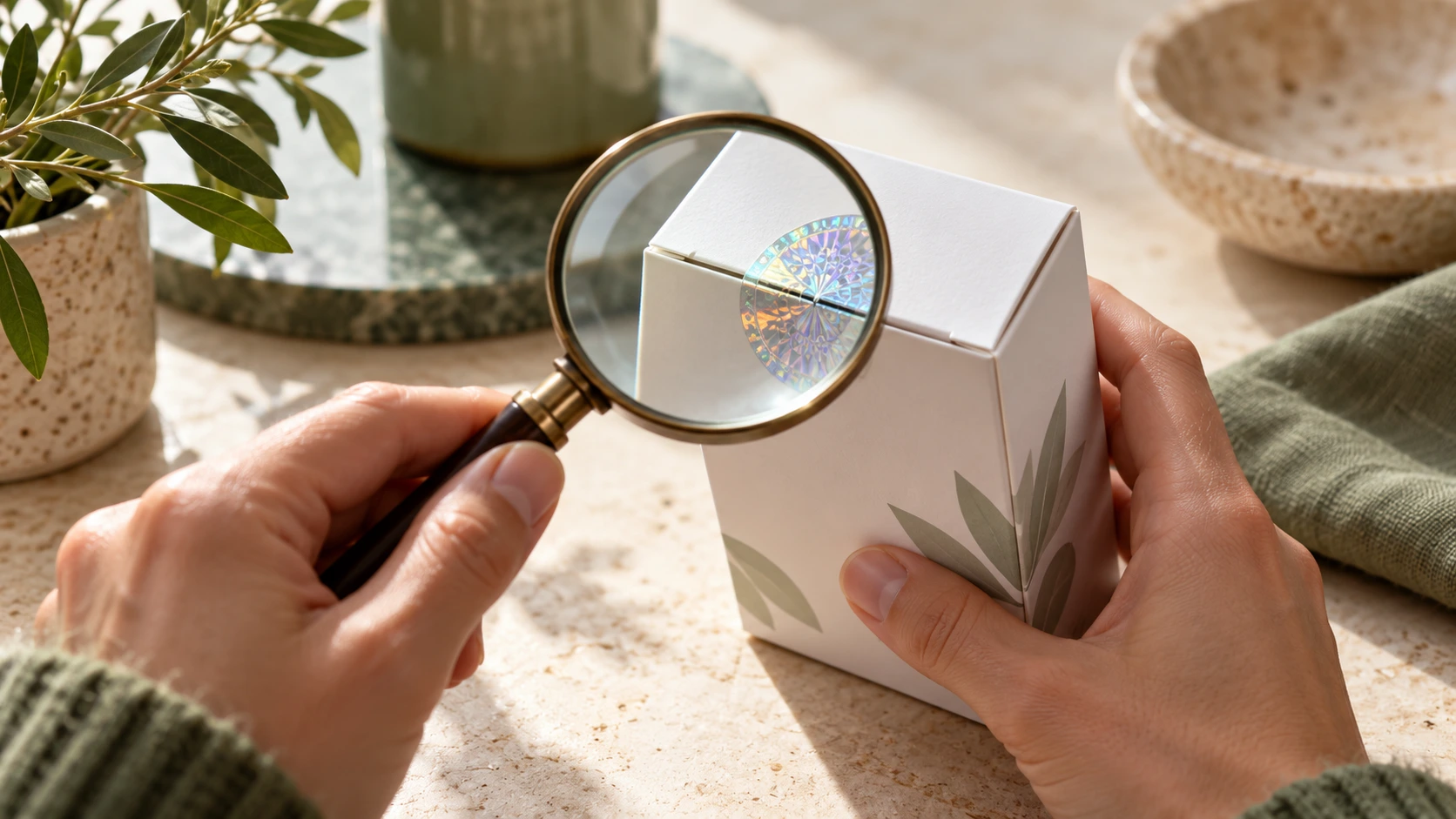
A Lipovon authenticity check starts with identifying the exact product and examining its packaging. It should not end with a familiar-looking box or a positive code response. Those details address questions about identity and traceability; they do not establish that a supplement is safe, effective or suitable for you.
This guide explains how to collect useful evidence before buying or opening a pack. The aim is to turn a vague question such as “Does this look genuine?” into specific questions a seller can answer.
Start with the exact product name
Keep the full product name, variant and pack size together. A photograph of one version is not a reliable reference for another. Open the Lipovon product listing and note the item you are considering, then ask for photographs of the stock that would actually be supplied.
Request clear images of the front, back, base and any outer carton. A cropped promotional image may not show the batch information or the complete label. Save the date of your enquiry so that you can distinguish the seller’s reply from an older product image.
Inspect the packaging as a set
The SuperLidaSlim homepage describes codes and a hologram as authenticity features. Treat these as features to investigate, rather than a guarantee that can be established from a photograph alone.
Record the details before opening
- Compare the product name and pack size with your order.
- Photograph the batch or lot identifier and date marking.
- Check whether the outer carton and bottle identify the same variant.
- Look for damaged seals, overwritten details or an unreadable information panel.
- Keep the receipt and the seller’s written answers with your photographs.
A packaging difference is a reason to ask for clarification. It does not, by itself, prove counterfeiting: artwork can change. Equally, matching artwork is not conclusive evidence of authenticity. Ask for an explanation tied to the actual pack, not simply a reassurance that all stock is genuine.
Use verification codes carefully
If a pack includes a verification process, establish which website the manufacturer intends customers to use. Check the destination before entering anything. A code check should not require your payment-card details, account password or an unrelated download.
Save the response and the date you checked it. If the response says the code is invalid, already used or unrecognised, stop and ask the seller and manufacturer to explain it. Avoid repeatedly trying different websites or posting the full code in a public review.
Ask what the result actually confirms
A response recognising a code may concern the code or packaging record. Ask whether it identifies the product variant and batch. Do not interpret a recognised code as a laboratory test, a medical recommendation or proof that the bottle’s contents match its label.
Keep authenticity separate from safety
The MHRA has warned about slimming products sold as natural or herbal that contained undeclared medicines. “Natural” is therefore not a sufficient safety check. This is a general warning, not a finding about the contents of a particular Lipovon pack.
Even when a seller resolves a packaging question, you still need the full ingredient list and warnings. Questions about whether a supplement is appropriate alongside your medicines belong with a pharmacist or another qualified healthcare professional, rather than a code-verification service.
A useful message to send before buying
“Please confirm the exact Lipovon variant and pack size you would supply, and send current photographs of the complete label, batch identifier, date marking and security features. Please also explain the verification route for that pack and what a successful result confirms.”
Next step: use the SuperLidaSlim contact section to request the pack details before placing an order. If the answers remain incomplete or inconsistent, pause the purchase.