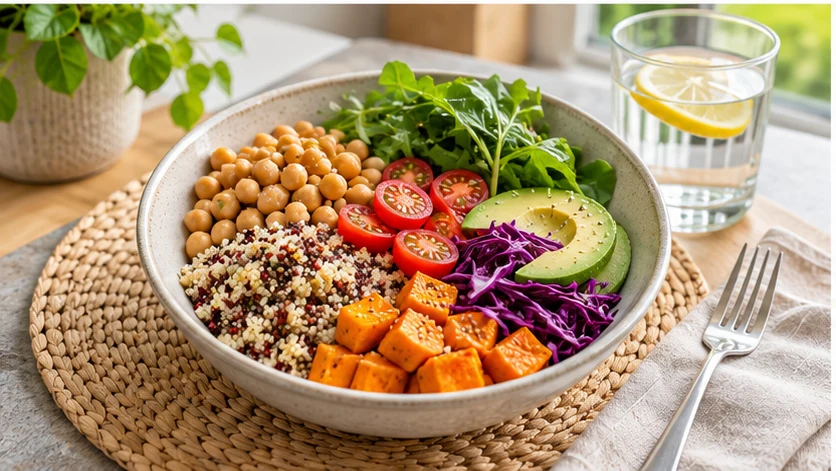
Balanced meals can support a sustainable approach to managing weight without relying on rigid food rules. A practical starting point is to combine vegetables, a source of protein and an appropriate portion of starchy food, while adapting meals to personal needs.
Begin with vegetables and fruit
Aim to include a generous variety of vegetables with main meals. Frozen and tinned options can be convenient; choose products without unnecessary added sugar or salt where possible. Fruit makes a practical addition to breakfast or snacks.
Include a protein source
Beans, lentils, eggs, fish, tofu and lean meat are examples of protein foods. Combining a protein source with vegetables and a suitable portion of starchy food can make a meal more balanced.
Choose satisfying carbohydrates
Potatoes, rice, bread and pasta can all fit into a balanced diet. Wholegrain choices add fibre; portions can be adjusted to your needs rather than eliminating entire food groups.
Make the routine realistic
For example, a hypothetical weekday lunch could combine chickpeas, mixed vegetables, brown rice and a yoghurt-based dressing. Preparing ingredients in advance may make this easier on busy days. Consistency is generally more useful than extreme short-term restrictions.
Where supplements fit into the conversation
Food supplements are not a replacement for varied meals. If you are researching products, view the shop’s listings as a starting point for checking labels, not as evidence of weight-loss results.
Further reading and safety information
For independent guidance, see NHS guidance. This article is general information, not personalised medical advice.