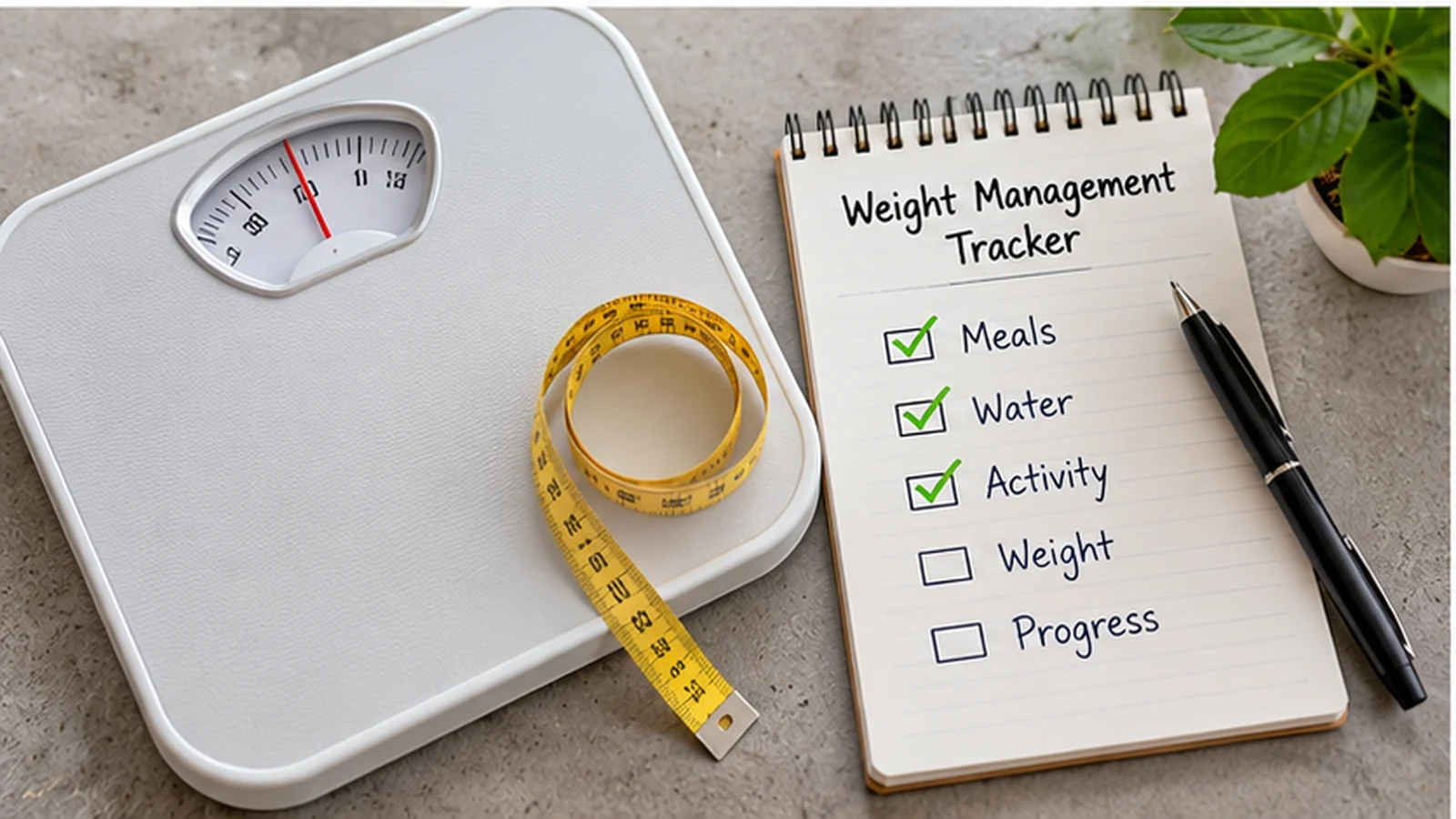
A single scale reading does not tell the whole story. You can also review routines, walking, meals and wellbeing while keeping measurements optional and proportionate.
Choose progress markers that suit your goals
Some adults find occasional weight measurements useful; others find them stressful or unhelpful. NICE recommends being alert to the risk of disordered eating when suggesting monitoring behaviours, and notes that tracking food, physical activity or measurements may be helpful for some people.
Consider choosing two or three markers you can influence directly: preparing balanced lunches, taking regular walks, getting consistent sleep or building strength. These can support health even when the number on the scales is unchanged.
Create a weekly check-in rather than a daily verdict
Set aside a few minutes once a week to ask: What felt manageable? When was my routine interrupted? What small change could make next week easier? If you choose to weigh yourself, try to focus on longer-term context, not an isolated result.
For someone whose work schedule is variable, a repeatable plan might mean having a simple lunch option ready and scheduling movement on the days with more flexibility. This is a hypothetical example, not a prescribed diet.
Include movement and recovery
NHS guidance for adults aged 19–64 recommends at least 150 minutes of moderate activity a week or 75 minutes of vigorous activity, with strengthening activities on at least two days. People who are inactive can begin gradually and adapt activity to their circumstances.
Walking, dancing and cycling can all count as moderate activity when they raise your breathing and heart rate. Rest, sleep and a sustainable routine are part of the picture too.
Know when tracking is no longer helpful
If weighing, calorie counting or food tracking begins to cause anxiety, guilt or restrictive behaviour, stop and seek advice from a qualified healthcare professional. Progress tracking is optional: it should support your wellbeing, not undermine it.
If you are considering a weight-management supplement as part of your overall plan, assess its ingredients and precautions separately. Habit improvements do not demonstrate the effectiveness of any product.
To review available product listings and check current ingredient information, browse the Super Lida Slim shop. This is not an endorsement of any product’s effectiveness or safety.
Further reading
Educational information only. This article does not offer personalised medical advice or establish the safety or effectiveness of a particular supplement. Seek advice from an appropriately qualified professional.